If you run an auto repair shop or service centre in Ontario, parts and inventory are one of your biggest expenses. How you track them directly affects your tax bill, your cash flow, and your ability to survive a CRA audit.
Why inventory tracking matters for tax
Your taxable income is revenue minus expenses. One of the largest expenses is cost of goods sold (COGS), which for an auto shop is mainly the cost of parts used in repairs. COGS is calculated as:
Opening inventory + Purchases during the year - Closing inventory = Cost of Goods Sold
If you do not track closing inventory accurately, your COGS is wrong, and so is your taxable income.
What CRA expects
CRA requires businesses with inventory to take a physical count at least once a year (at year-end). The count should include:
- All parts on shelves and in storage
- Parts ordered but not yet received (if you have been invoiced)
- Parts on consignment
- Core returns and warranty parts
Each item should be valued at the lower of cost or market value. CRA accepts FIFO (first in, first out) or average cost methods. Pick one and stick with it.
Common mistakes auto shops make
- Not doing a year-end count at all. If CRA audits you and you cannot produce an inventory count, they will estimate your closing inventory, usually in a way that increases your taxable income.
- Mixing personal and business parts purchases. If you buy parts for a personal vehicle using the shop account, those costs need to be backed out of business expenses.
- Not tracking warranty and core returns. When you return a core (old part) and receive a credit, that credit reduces your parts cost.
- Expensing all parts purchases instead of running them through inventory. If you buy a batch of oil filters at the start of the year but use them throughout the year, the unused ones at year-end are inventory, not an expense.
Simple tracking methods that work
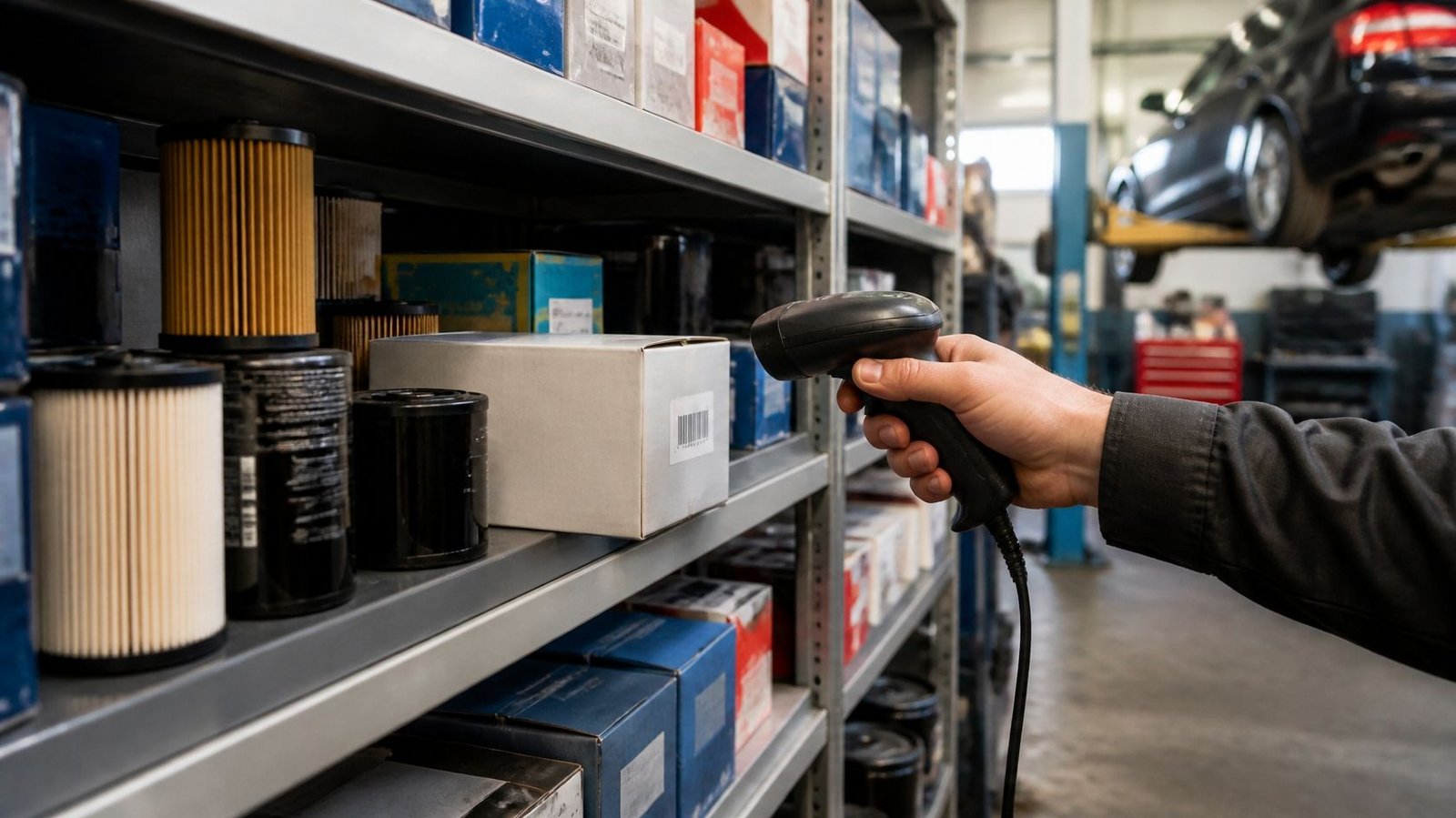
- Basic: a spreadsheet listing all parts on hand at year-end, with purchase cost and supplier.
- Intermediate: shop management software (like Mitchell, ShopBoss, or AutoServe1) that tracks parts in and out and generates inventory reports.
- Advanced: integrated POS and accounting software that automatically updates inventory when parts are sold or received.
Obsolete inventory
If you have parts sitting on shelves that you will never sell or use (superseded parts, wrong parts ordered, damaged stock), you can write them down to their net realizable value (which may be zero) for tax purposes. Document the write-down with a list of the items, their original cost, and why they are worthless.
One habit that fixes most problems
Reconcile your parts purchases to your supplier statements monthly. If the total you have recorded as purchases does not match what your suppliers say you bought, something is missing. Catching it monthly is a lot easier than trying to sort it out at year-end.
L&R Accounting works with auto shops and service centres on bookkeeping, inventory management, and tax compliance. If your parts tracking needs work, we can help you set up a system that works for your shop and for CRA.
Geetha Srinivasan, CPA (Ontario), CPA (US)
L&R Accounting Services Ltd.